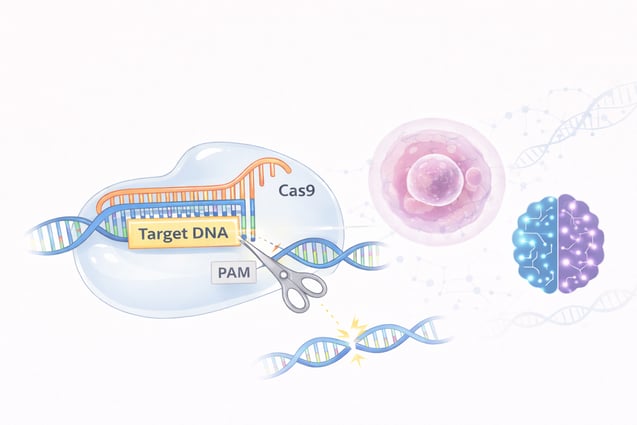
Gene Editing Services hero - blue

StemEdit
Next-Level Gene Editing Service

License-Free AI-Designed Gene Editing for Research, Cell Therapy Development and Clinical  Translation

StemEdit Service Overview

StemEdit provides end-to-end genome editing services for mammalian cells, with specialized expertise in iPSCs, supporting programs from research through clinical translation.

Combining AI-designed genome editing, engineered cell lines, and custom editing services, StemEdit enables researchers to accelerate discovery, engineer complex cell models, and advance translational and cell therapy programs without complex licensing requirements.

For stem cell applications, StemEdit enables a seamless transition from research-grade editing to clinical-grade iPSC lines without restarting cell line development.
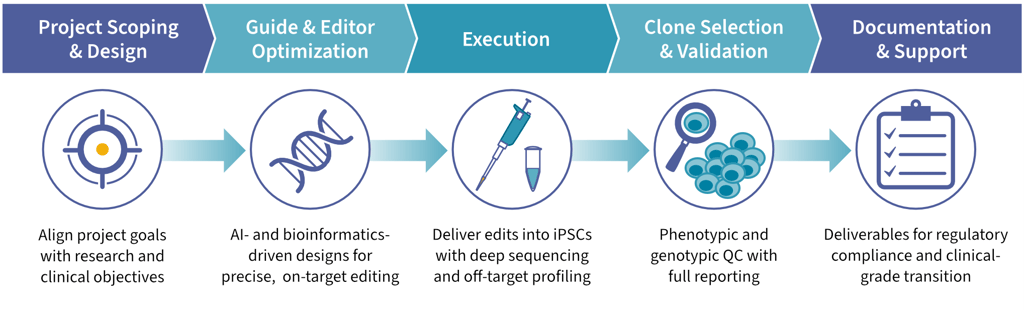

StemEdit service overview 2

As part of the StemEdit platform, OC-1 complements REPROCELL's knockout cell lines, landing pad technology, and custom gene editing services to provide a comprehensive, license-free genome engineering solution. 

Why Choose StemEdit?

AI-Designed Precision Editing

StemEdit is powered by OC-1, REPROCELL's AI-designed gene editing nuclease based on OpenCRISPR™-1. Optimized for high-performance genome editing in human cells, OC-1 combines precision, efficiency, and a license-free model to support stem cell engineering and translational research.

Core Advantages of StemEdit

  • License-Free
    Freedom to operate without licensing restrictions, accelerating research and commercialization.

  • Precision & Safety
    AI-designed nuclease delivers high editing efficiency, reduced off-target activity, and lower predicted immunogenicity.

  • Accelerated Development
    Minimize iterative editing and clone screening to shorten development timelines.

  • Clinical Alignment
    Generate precisely defined genotypes in research-grade cells before transferring seamlessly to matched clinical-grade iPSC seed banks for GMP manufacturing.

OC-1 , licensed from Profluent Bio, forms the foundation of REPROCELL's StemEdit platform. REPROCELL has expanded the platform beyond the core nuclease by developing integrated gene editing products, engineered cell lines, and custom genome engineering services, providing a comprehensive, license-free solution for stem cell research and translational development.

*StemEdit is provided without licensing requirements for the editing platform. Customers remain responsible for ensuring freedom to operate for their specific therapeutic targets and intended commercial applications. 

StemEdit: Custom Gene Editing Services for iPSCs

StemEdit provides tailored genome editing services to generate the precise genetic modifications your project requires. Programs can begin with research-grade editing and screening, then, when ready, transition seamlessly into clinical-grade iPSC development using aligned processes and documentation. StemEdit enables a wide range of complex genetic modifications in iPSCs with confidence, reproducibility, and full traceability.

StemEdit Capabilities 

  • Knock-in of large gene fragments (e.g., reporters, regulatory elements via landing pad technology)
  • Knock-in of biallelic mutations for disease models or functional studies
  • Knock-out of single or multiple genes

Discover how StemEdit combines AI-designed genome editing with matched research and clinical-grade iPSC workflows to streamline the path from discovery to clinical development. 

Flexible Starting Material

StemEdit is designed to fit your program:

  • Use your own iPSC line
  • Select from REPROCELL’s research- and clinical-grade iPSC clones
  • Request custom iPSC line generation tailored to your project needs, from disease models to therapeutic candidates

Flexible Facility Options — USA & Japan

You can run your StemEdit project at either:

Choose the site that aligns with your timeline, throughput, and regulatory requirements.

StemEdit - REPROCELL USA and Japan

References

  1. Ruffolo JA, Nayfach S, Gallagher J, et al.Design of highly functional genome editors by modelling CRISPR-Cas sequences. Nature 645(8080):518-525, (2025).
  2. Thomson T, Li G, Strilchuk A, et al. Harnessing artificial intelligence to advance CRISPR-based genome editing technologies. Nature Reviews Genetics 27, pages 212–230, (2026).

Related Press Release

Contact our experts